
Our new user-centric APIs and v5.x.x SDKs offer an improved user and data management experience. However, they may not be at 1:1 feature parity with our previous versions yet.
If you are migrating an existing app, we suggest using iOS and Android’s Phased Rollout capabilities to ensure that there are no unexpected issues or edge cases. Here is the documentation for each:
If you run into any challenges or have concerns, please contact our support team at support@onesignal.com
OneSignal is a free email, sms, push notification and in-app message service for mobile apps. This plugin makes it easy to integrate your .NET application with OneSignal.
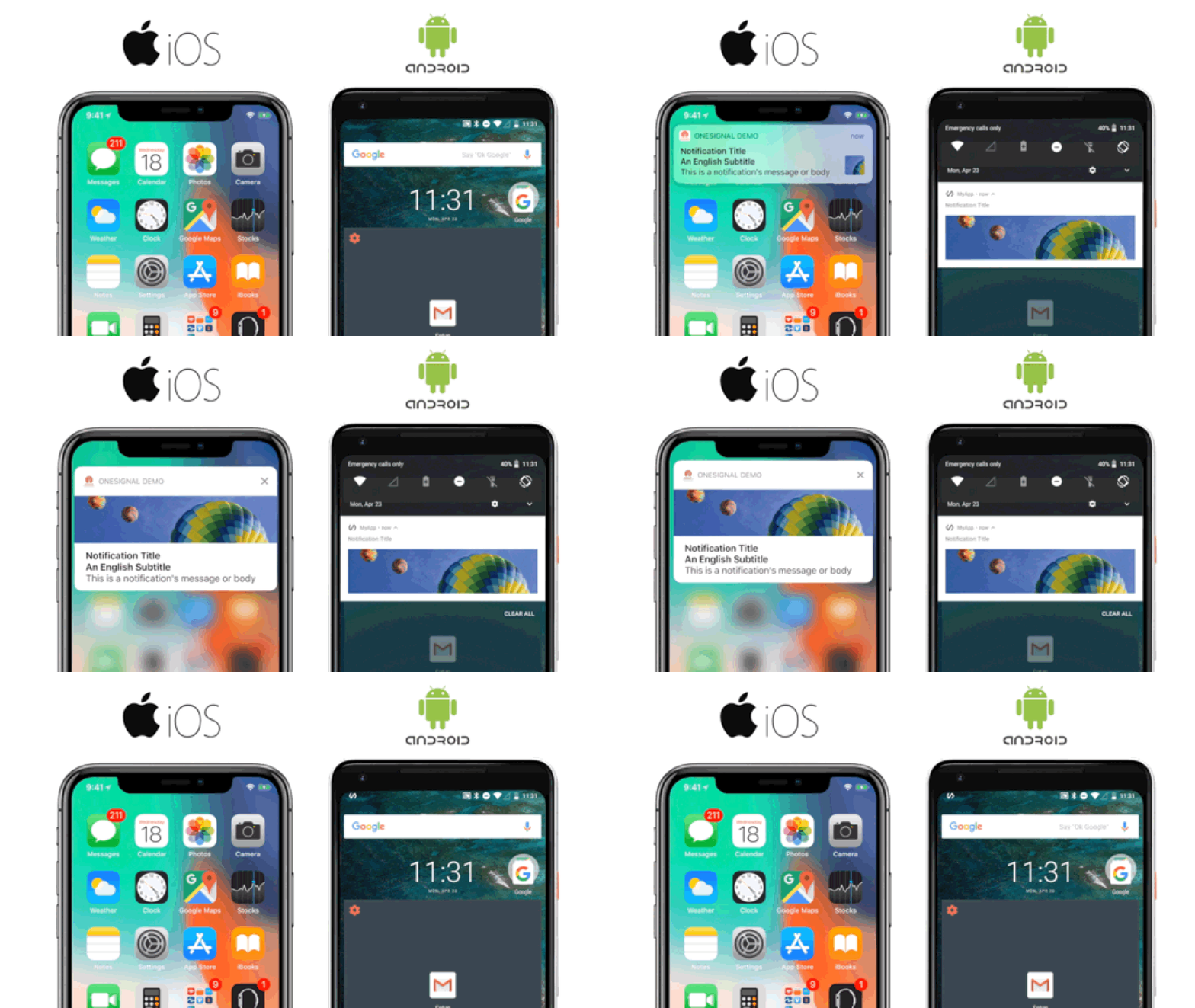

.NET6+ projects: See the Setup Documentation for installation and setup instructions. Xamarin projects: See the Setup Documentation for installation and setup instructions.
See OneSignal's .NET SDK API page for a list of all available methods.
By default, OneSignalSDK.DotNet includes OneSignal's native location module so OneSignal.Location works without extra setup. If your app does not use location features, you can exclude the native location module from iOS and Android builds with an MSBuild property in your app project:
<PropertyGroup>
  <OneSignalDisableLocation>true</OneSignalDisableLocation>
</PropertyGroup>
When disabled, OneSignal.Location.RequestPermission() and OneSignal.Location.IsShared = value no-op on native builds without the location module, and OneSignal.Location.IsShared returns false.
For regular development, make sure the property is set for the app build that consumes the SDK. If you are building from source with project references or scripts, pass the property to the dotnet build command so it applies to the referenced SDK projects too:
dotnet build -f net10.0-ios -p:OneSignalDisableLocation=true
dotnet build -f net10.0-android -p:OneSignalDisableLocation=true
In CI, include the OneSignalDisableLocation value in build cache keys, or clean build outputs when toggling it. This avoids restoring stale iOS app bundles, Android intermediates, or bin/obj outputs that were produced with the location module enabled.
This is an MSBuild-only setting; Gradle properties are not supported for disabling the .NET SDK location module.
See this repository's release tags for a complete change log of every released version.
Please visit this repository's Github issue tracker for feature requests and bug reports related specificly to the SDK.
For account issues and support please contact OneSignal support from the OneSignal.com dashboard.
Install dotnet 10 or later
Use the OneSignalDev app to test the OneSignal functionality.
For Android you need a google-services.json file from Firebase. Place it above the repo root and run the setup script:
google-services.json
OneSignal-DotNet-SDK/
Then from the repo root: ./setup-devapp.sh
Run iOS like so: dotnet build -t:Run -f net10.0-ios
For Android, run: dotnet build -t:Run -f net10.0-android
- .NET 10.0 for Android (
net10.0-android) - .NET 10.0 for iOS (
net10.0-ios)
- iOS 12.2 and higher.
- Android 5.0 (API Level 21) and higher.
- Multi-platform App UI (MAUI) applications.