

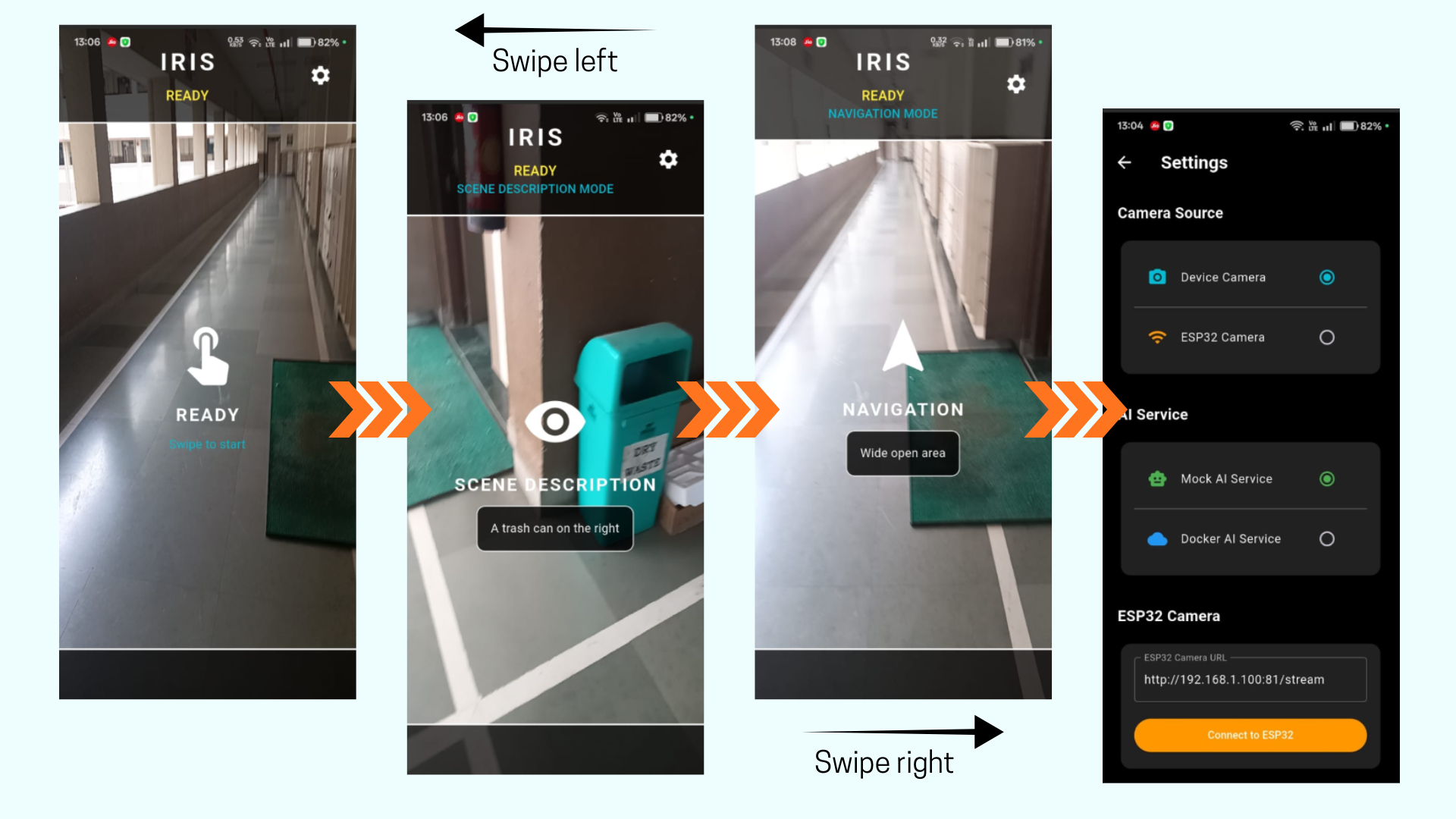
Iris is a pair of AI-powered smart glasses designed to assist visually impaired individuals. Equipped with a ESP32-CAM Module Iris provides real-time audio descriptions of what the camera sees and helps with navigation and scenario discription. Iris also has an AI-powered mobile application built to empower visually impaired users by transforming any smartphone into a real-time vision assistant and controller for the hardware . With advanced computer vision and natural language processing, Iris provides scene descriptions, obstacle and object recognition, and intuitive navigation guidance. The app ensures maximum accessibility through a blend of voice narration,swipe gestures for easy accessibilty and haptic feedback enabling users to confidently explore and interact with their surroundings — anytime, anywhere.
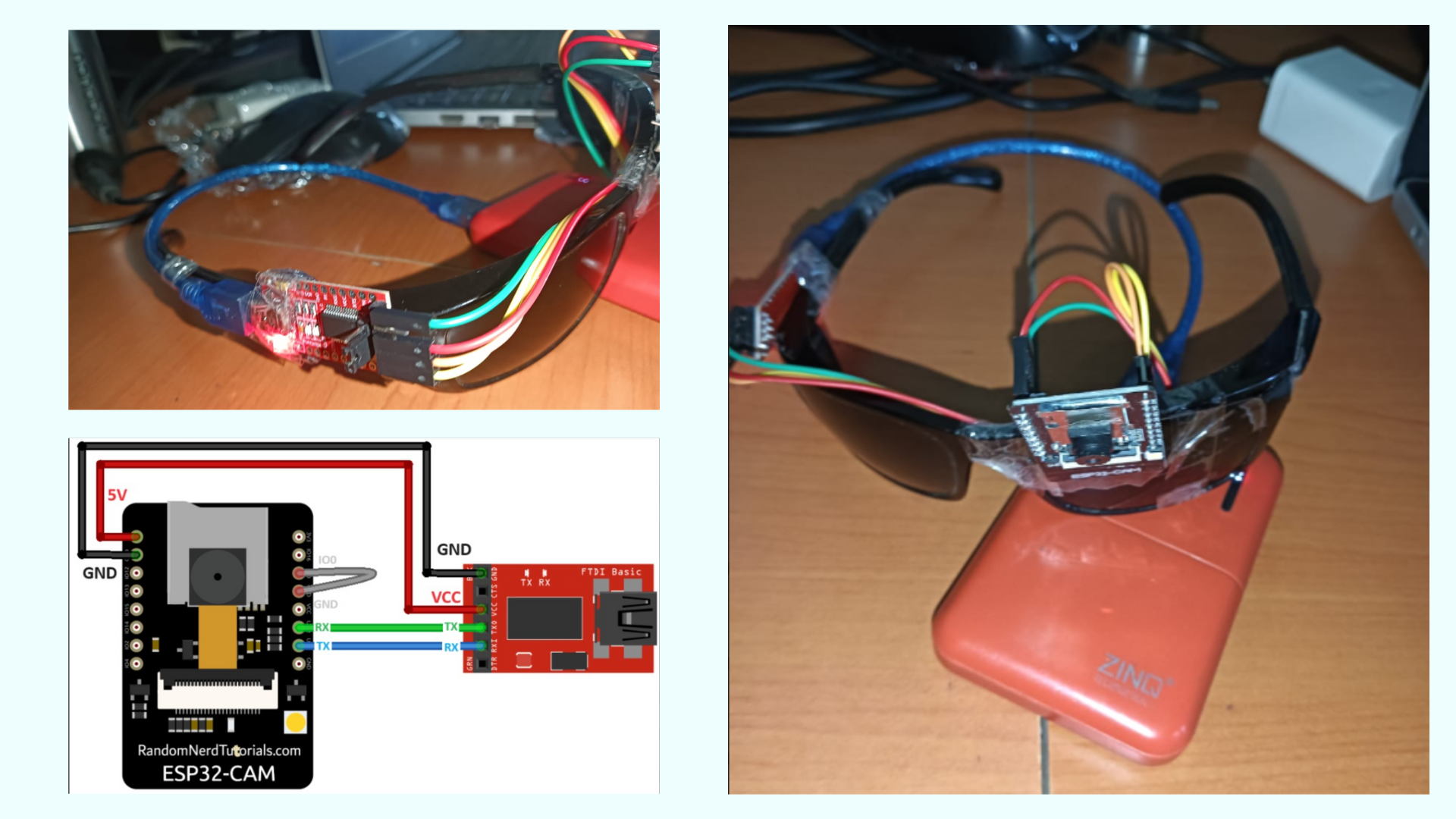
👓 Smart Glasses Integration
- Camera attached to spectacles captures surroundings.
🧭 Navigation Mode Mobile App (Iris App) 📱
- Provides voice + haptic instructions for navigation.
- Detects obstacles and guides step-by-step.
✋ Gesture & Haptic Interaction
- Swipe gestures for dashboard navigation
🎨 Simple UI
- Clean, responsive, and user-friendly design
🌆 Scene Description Mode
- Captures live feed and uses AI to describe surroundings.
- Outputs via Text-to-Speech + vibration feedback.
- Mobile App: Flutter (cross-platform, accessibility-first UI)
- AI Models (On-Device):
- Vision AI: Hugging Face Inference API (BLIP, free tier)
- Voice Feedback: Android TTS API
- Haptics: Native Android/iOS vibration APIs
- On-device (Free): Flutter, Android APIs
- API (Optional): Hugging Face Inference API (Free tier: ~30k tokens/month)
- Hardware: ESP32 CAM - 560/- , FTDI - 140/- , UNO cable - 30 , Jumper wire - 15/-
- Total: 💸 0/- for prototyping the app; scalable with paid tiers and 750/- in hardware.
- Enables independence and confidence for visually impaired individuals.
- Bridges the gap between AI vision research and real-world usability.